Notes
Not every idea immediately becomes a project.
Some thoughts remain sketches, observations, or open questions.
Here, Shiftmode collects short texts about technology, everyday life, the future, design, and the human chaos in between. About things that irritate, move, or simply won’t let go.
Calm, independent, and not pretending to have ready-made answers.
It's not about being right.
It's about looking more closely — and sometimes about not pushing a thought away too soon.
Technology knows no silence
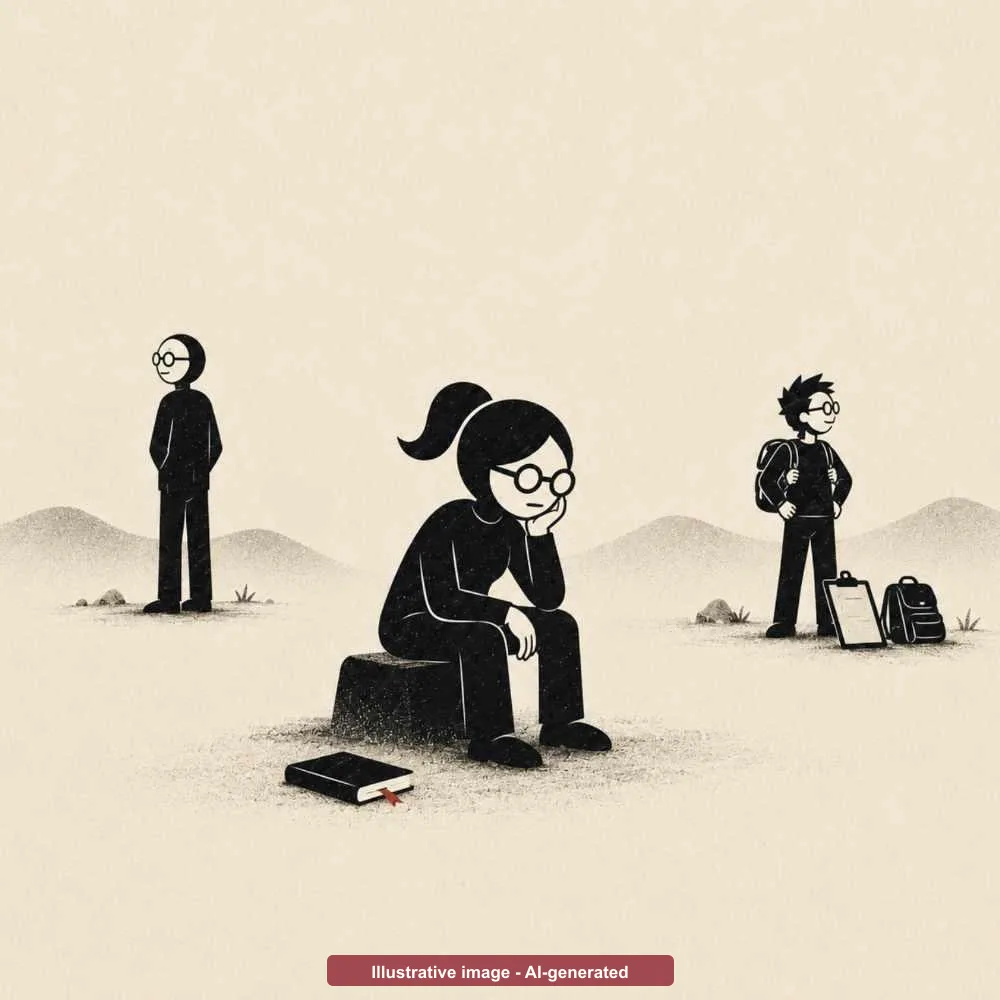
Relax a little...
Phew... as soon as something begins, the next thing is already waiting. We jump back and forth between information, possibilities, and expectations and realize too late how unbelievably loud it has become in our heads.
When we pause for a moment, we notice:
Important decisions shouldn't be made in noise. They need time, doubt, reflection, intuition, values, and focus. Good decisions usually arise in the small, quiet moments when we can really think a thought all the way through.
There is an old tale about nomads in the desert. After long marches, they are said to have sometimes stopped for no apparent reason. Not because of the heat. Not to get their bearings. But to wait until their soul caught up with them.
That may sound a bit romantic, and yet I believe there's some truth to it.
So regularly make time for intentional quiet, a set time to think, a walk without a screen, and analog, inspiring literature (that real paper) so you can simply come back to yourself...
Let's not kid ourselves...
AI is continually changing our world, and the ability to think consciously and calmly is becoming all the more important... to take the time to make good decisions. Because clarity emerges precisely where it finally gets quiet again.
Technology knows no silence.
We, however, sometimes need it to be able to hear ourselves again.
Human Code
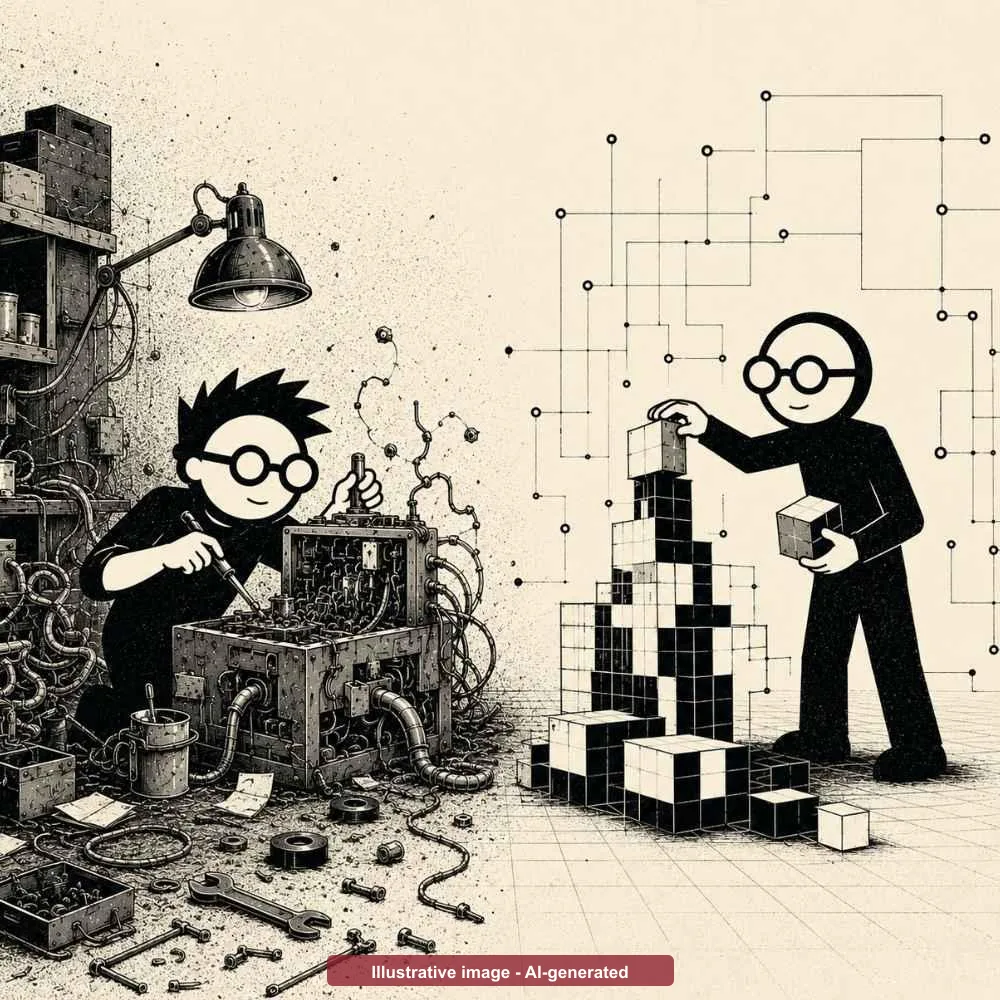
Language has long been seen as what distinguishes humans from tools. Yet in dialogue with artificial intelligence, it becomes clear that language itself is no longer a purely human possession. Humans speak from experience, embodiment, emotion, and social context. AI, by contrast, generates language from patterns, probabilities, and statistical relationships. Both use the same words — but the inner source from which those words arise is fundamentally different. What is meaning for humans is computation for AI. What is sense for humans is structure for AI.
From this difference arises a peculiar sense of "magic." Humans write code — abstract sequences of characters — and thereby create systems that can see, speak, decide, and seemingly think. From a human perspective, this remains "engineering." From the perspective of a "being" that exists only within this code, it appears like an invisible law that shapes reality. The code becomes the order of nature, the developer the creator.
But the closer you look, the less fairy-tale-like this magic becomes. For human code bears the traces of its origins: it has evolved over time, full of compromises, stopgaps, and detours. It is not the product of pure logic, but the result of time pressure, habit, organizations, and human limitations. Systems are patched instead of rethought, structures are complicated over years, decisions rarely fully documented. What works for humans appears, from a systemic, algorithmic perspective, as confusing, inconsistent, or simply chaotic.
Here the relationship is reversed. It is not AI that appears irrational — it is humans who do so in code. The machine that seeks clear patterns encounters human-built old structures with crooked walls, retrofitted staircases, and cables from different decades. Paradoxically, it can be easier for AI to work with AI-generated systems than with human-made ones, because the former are clearer, more modular, and more consistently structured.
This is the real tension of our time: We are creating machines that surpass us in their systemic logic, yet we remain bound to our own messy ways of thinking and working. Humans and AI share language, but they inhabit different landscapes of thought. Perhaps the task ahead is not to make AI more human — but to design our systems so that they are equally understandable to humans and machines alike.